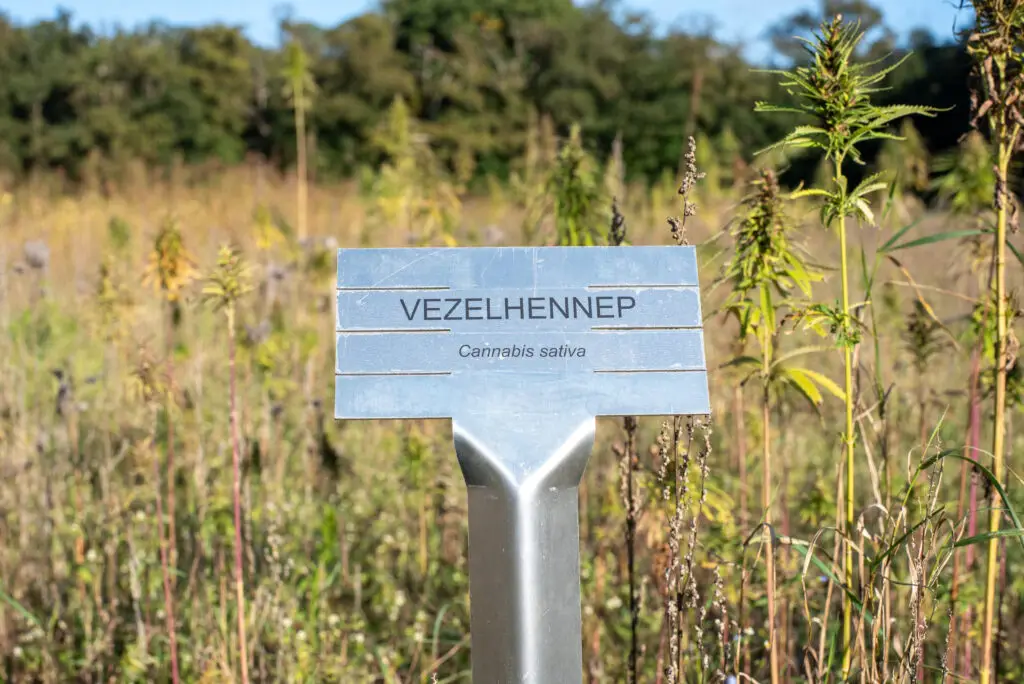
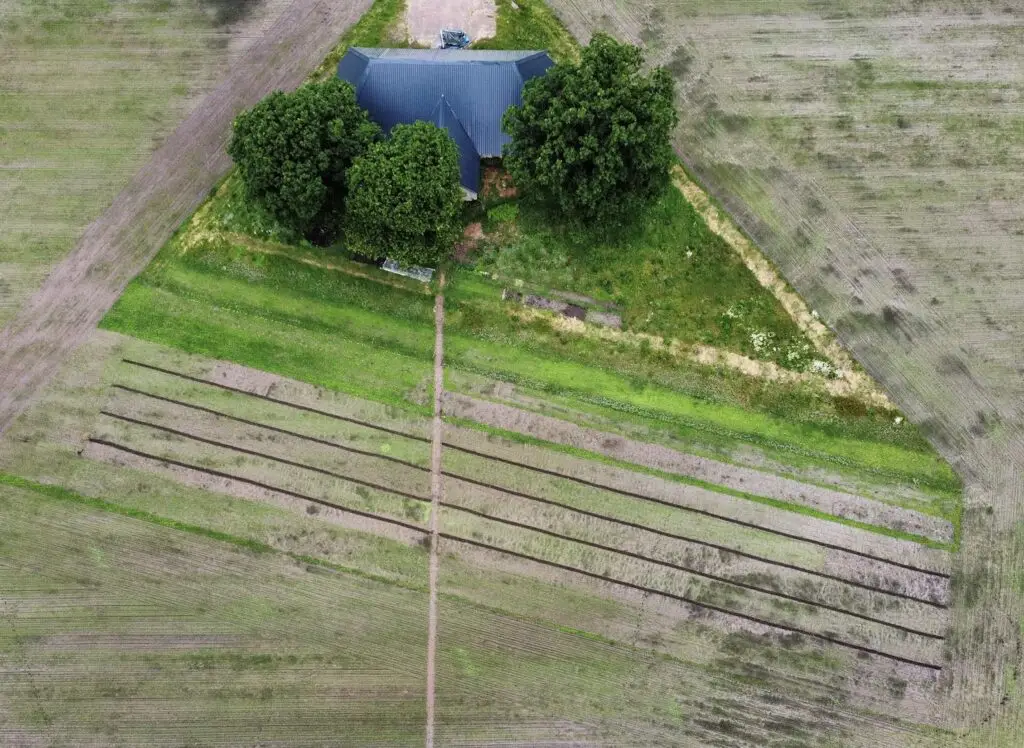
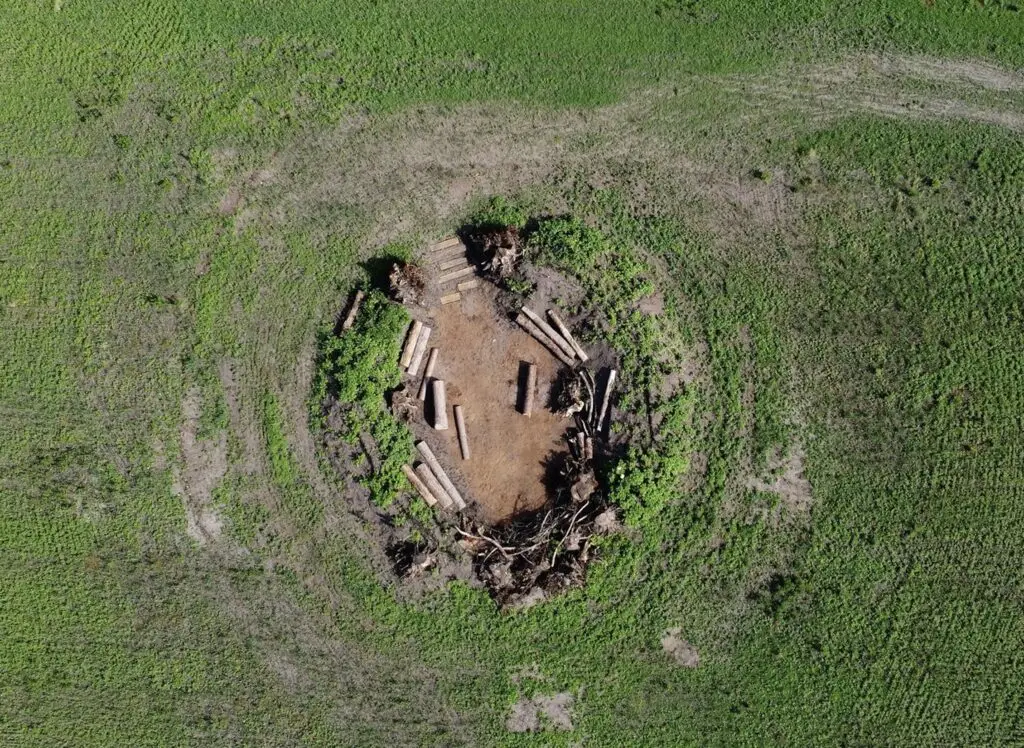
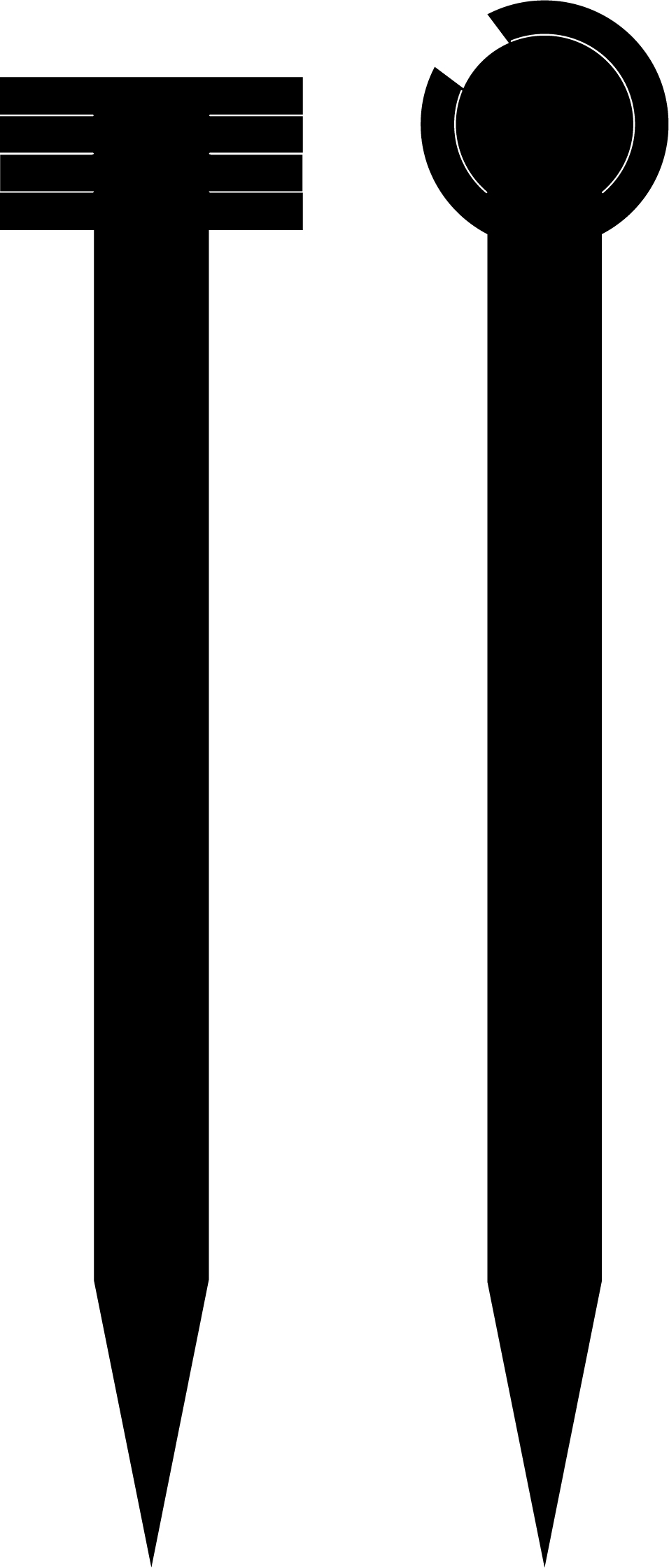
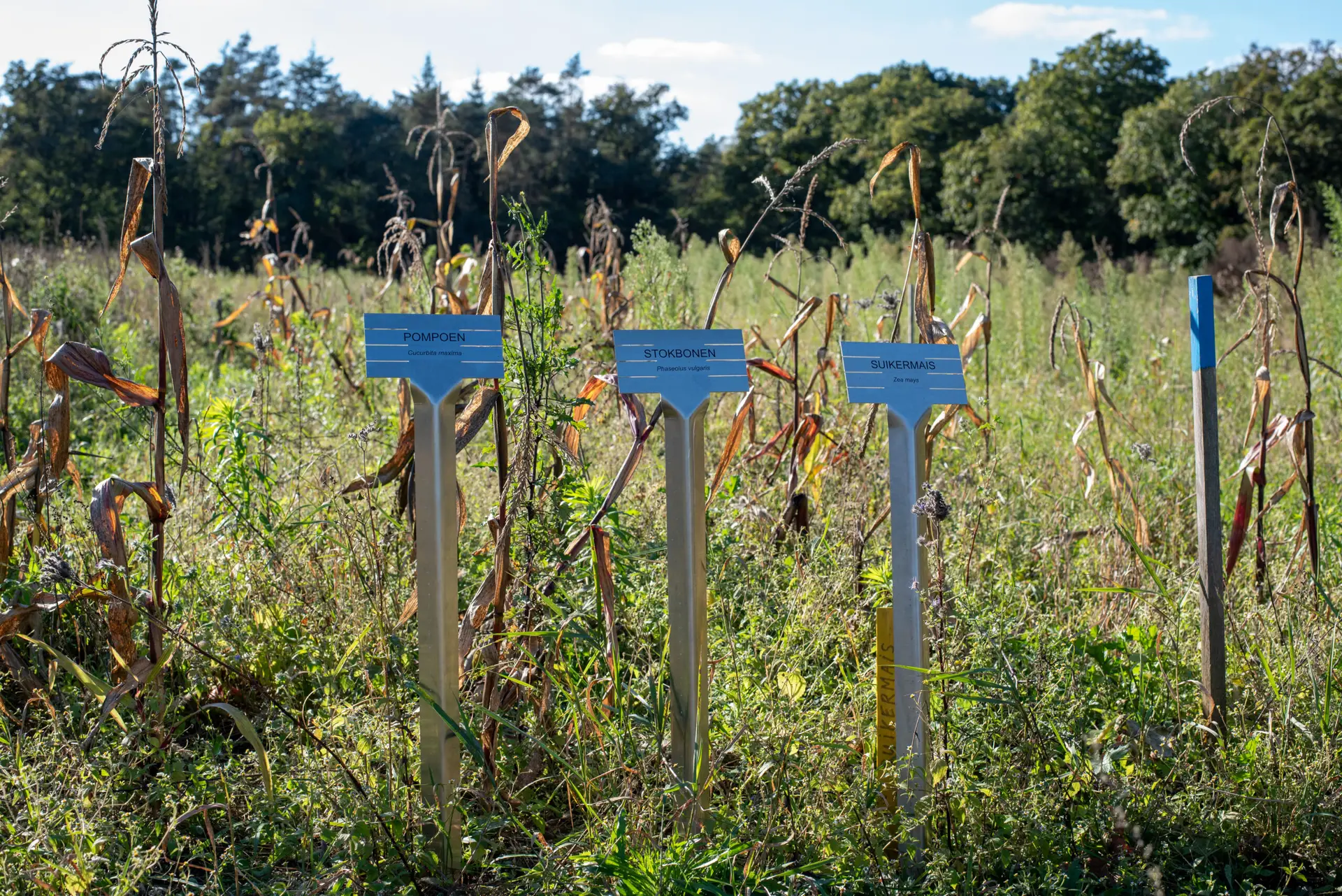
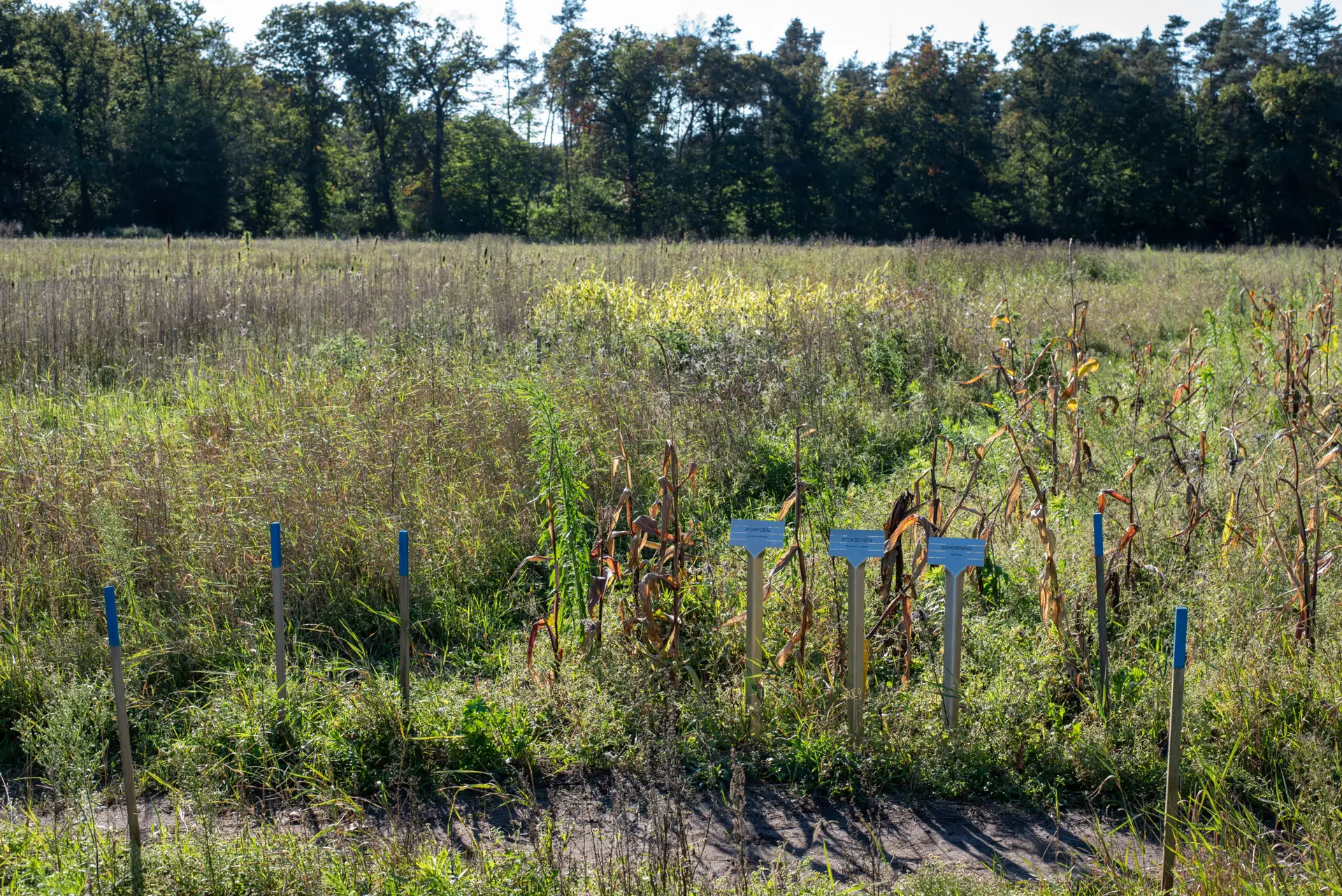
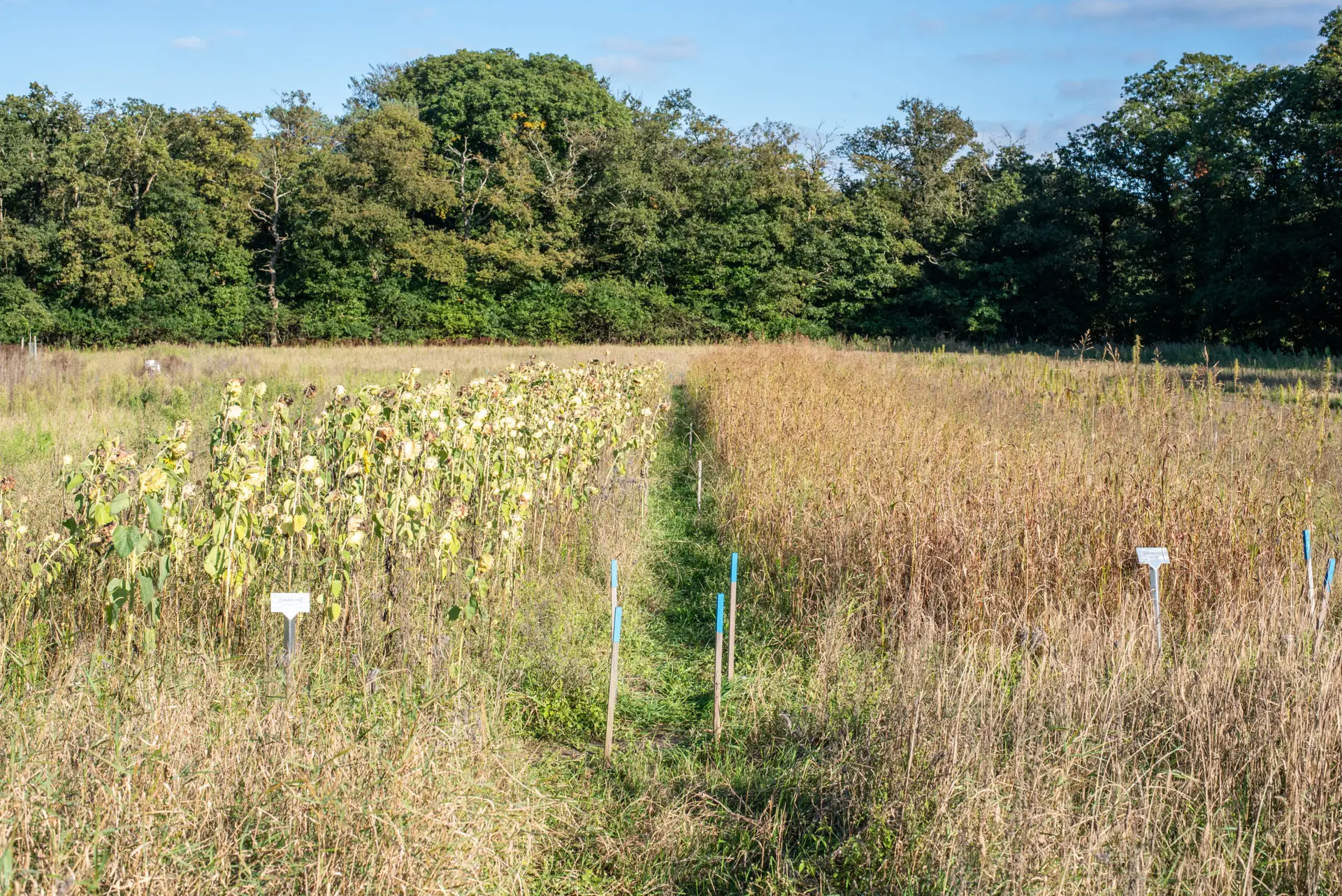
I proposed these “harrings”- name boards during my internship with Frank Bruggeman for Stichting de Hangar in Arnhem. Their shape follows the bird’s-eye morphology of two distinct cropping types used by Frank: the strip and the circular hügelbed.
The Hangar estate is a historic site originally built to camouflage a German bomber inside of a fake farm. Frank’s project aimed to bridge this wartime memory with the contemporary interest in eco-bio farming. My first impression of the place was the inherent conflict between the remnants of WWII and the proposition of a “utopian” collective effort of a community garden. The aluminium Nameboards, Pins, Harrings, Shards or Swords? Are used to poke, at the uncomfortable memory underneath the thin layer of the happy soil on the top.
Turning a feature of a landscape into a tangible object that fits in the palm of the hand, follows the ambition to create work for a place.. a shape that follows the soil, is purposed to extend the recognition of its cultural imprint. At the same time this process gentrifies the notion of a place and can result in a diluted or a palatable representation of what the place actually is. Therefor the challenge that stimulates my process is to challenge my understanding of the status quo.