At the site of the Queen Victoria Gardens in Melbourne, Sean Godsell was commissioned to build a temporary pavilion. His structure functioned like a mecha-water lily; through its kinetic drive, the steel walls would open with the sunrise and close at night.
The movement was synchronized with the day cycle, allowing the pavilion to integrate into the landscape of the city-center garden.
This automated interaction challenges the idea of a static shelter. By contrasting “coziness” with ongoing transformation, it asks: Can automation create coziness?
In the age of smart objects, the user experience revolves around anticipation. Yet, this anticipation is mediated by narrow-bandwidth sensors, effectively depriving us of our own haptic perception and tactile intelligence.
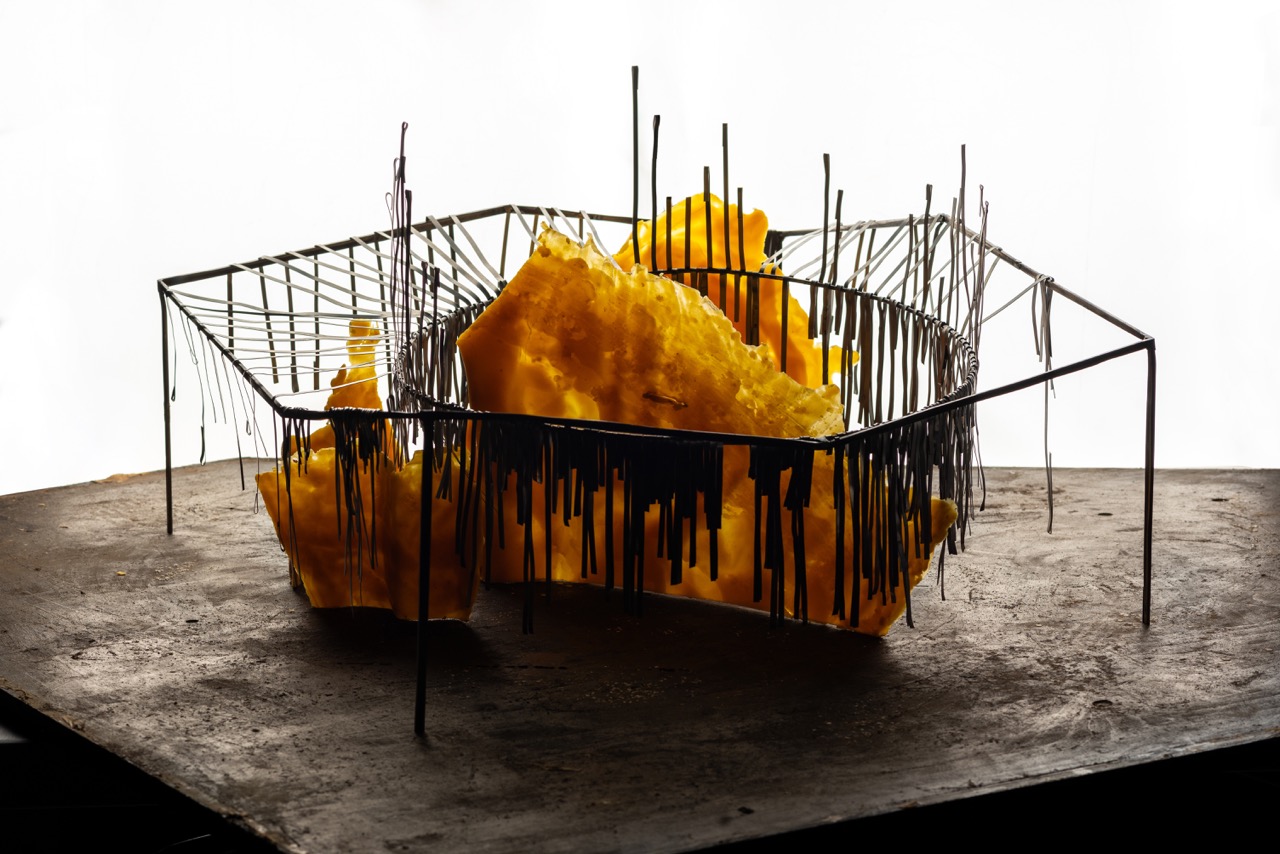
The goal of this model was a sculptural iteration of the deconstruction of the pavilion, resulting in a pondering on the question of control. This time, the change is generated from within, allowing visitors to physically affect the pavilion’s spatial configuration.
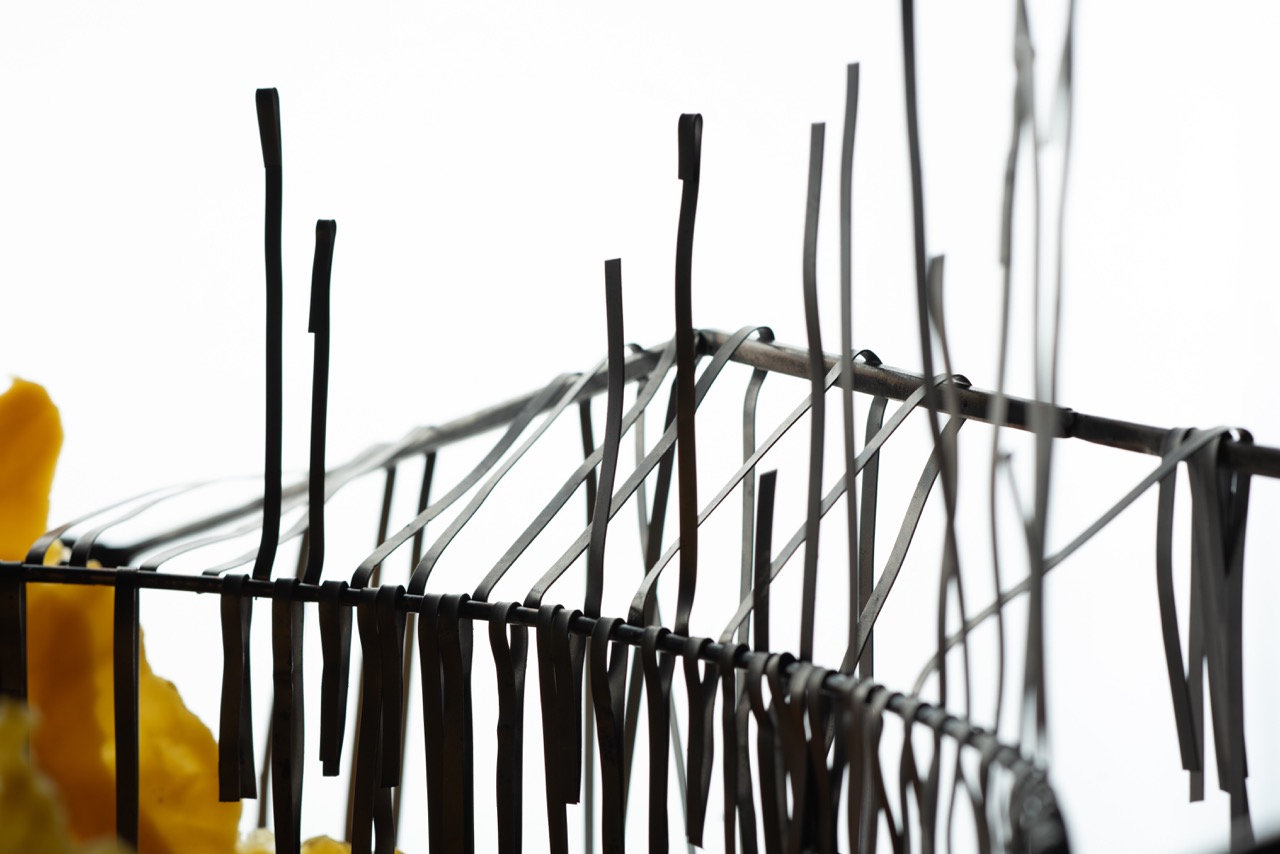
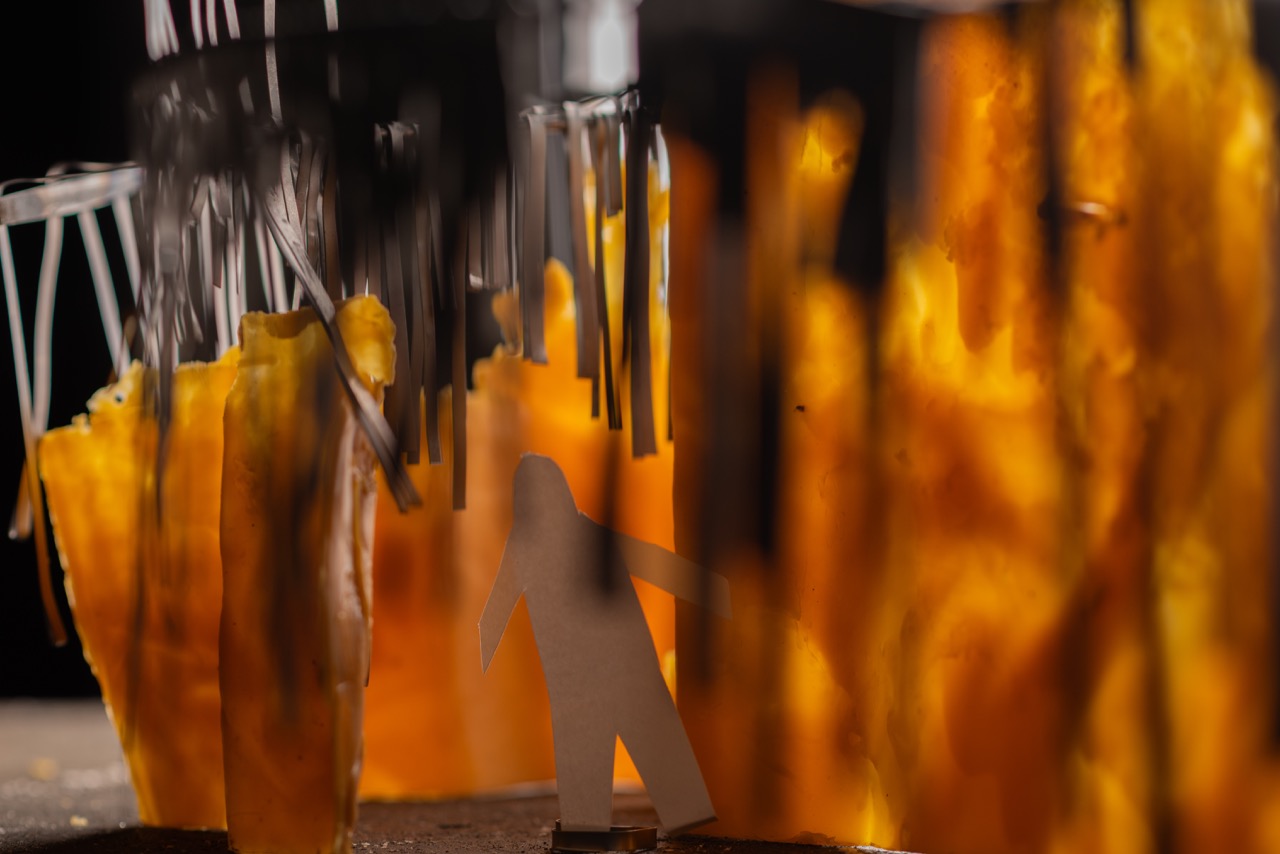
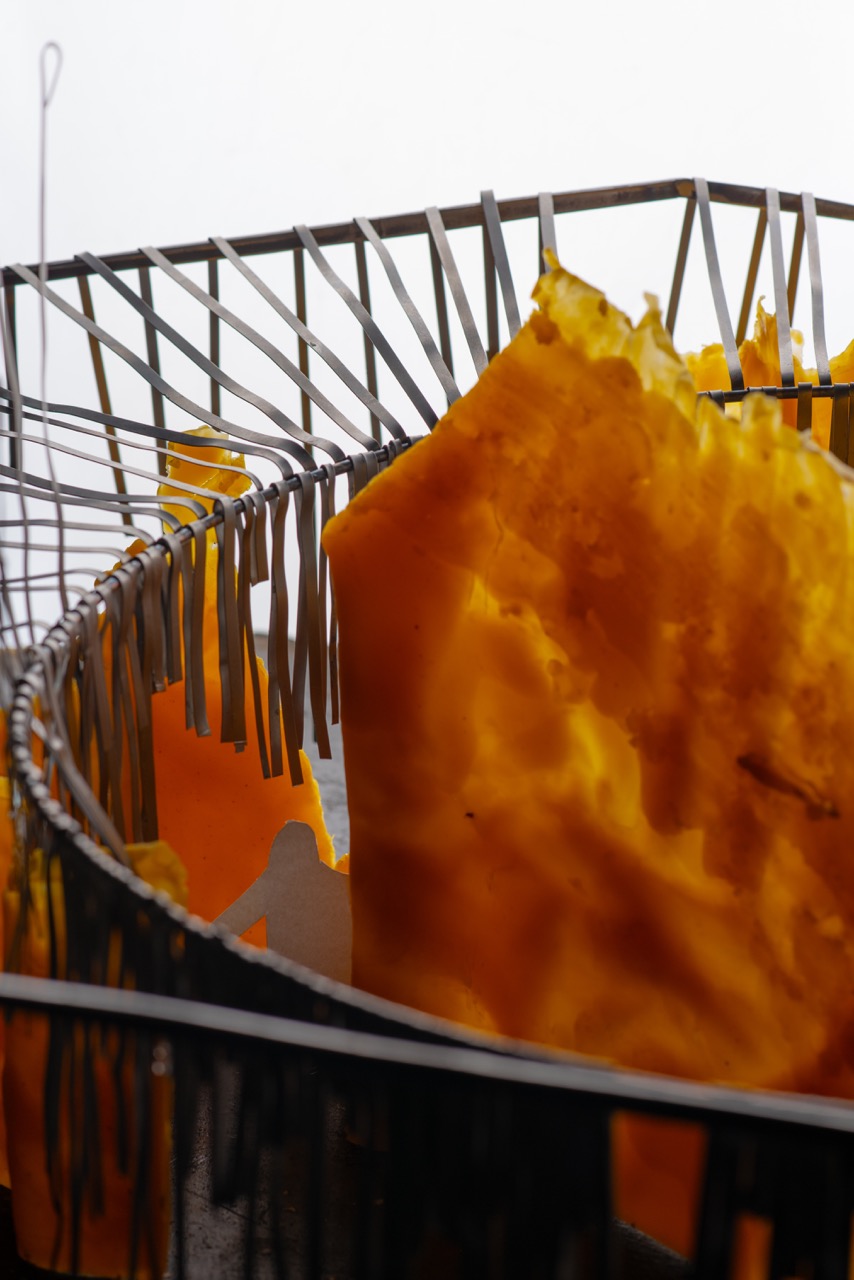
The structure is defined by a steel skeleton that forms a contour, enclosing the partitions of the curtain and the three inner walls. The division of space occurs now from the inside, through the walls of thermo-active beeswax that can soften with body heat, allowing sections to be bent in order to change the inner layout.
The second part consists of a series of metal belts that can be swung and moved, similar to a macramé curtain, reminiscent of shards of a deconstructed structure, that now exist only in the realm of inertness, waiting to yield to the human touch.